

Endometriosis and Fertility
Understanding endometriosis in the context of fertility – comprehensive medical support at Kinderwunschzentrum Dresden
Endometriosis can be more than chronic pain – for many women, it is closely tied to the dream of having children. Fertility challenges often add emotional strain to an already difficult diagnosis. At Kinderwunschzentrum Dresden, we provide clarity, medical expertise, and empathetic support. This guide explains how endometriosis affects fertility, what treatment options exist, and what realistic chances look like.
What does endometriosis mean for fertility?
Definition and mechanisms
Endometriosis occurs when tissue similar to the uterine lining grows outside the uterus – commonly on the ovaries, fallopian tubes, or pelvic lining. These lesions cause:
- inflammation
- scarring and adhesions
- ovarian cysts (endometriomas)
This environment can reduce natural conception chances.
Prevalence among women with infertility
- Around 10–15% of women of reproductive age have endometriosis.
- Among women with infertility, the prevalence rises to 30–50%.
- Nearly half of all women with endometriosis experience fertility challenges
This makes endometriosis one of the most common causes of female infertility.
Why does endometriosis impact fertility?
- Mechanical factors: adhesions can block fallopian tubes or impair ovulation.
- Inflammatory changes: cytokines in the pelvic fluid reduce sperm and egg quality.
- Endometrial receptivity: implantation is less likely due to altered uterine lining.
Treatment options for fertility with endometriosis
Surgical treatment
Laparoscopic surgery can remove lesions and adhesions.
- Benefit: in early or moderate stages, spontaneous pregnancy rates improve.
- Limitations: risk of postoperative adhesions, repeated surgery may reduce ovarian reserve
Assisted reproductive technology (ART)
When surgery is not an option or natural conception remains unsuccessful, ART is recommended:
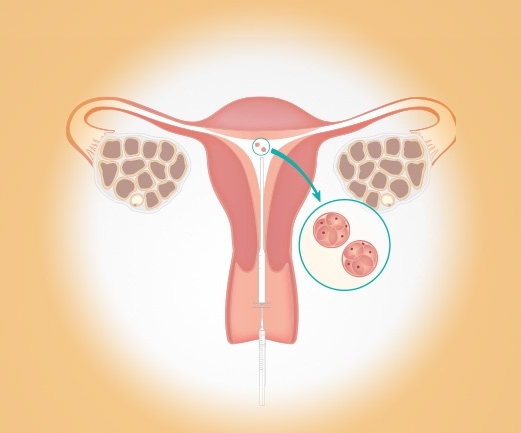
- Intrauterine Insemination (IUI) is one of the least invasive ways to support your journey toward parenthood. In this procedure, specially prepared sperm are carefully placed into the uterus through a thin catheter, helping to bring them closer to the egg at just the right time. However, IUI may not be suitable if the fallopian tubes are blocked or in cases of more advanced endometriosis. In those situations, other treatments such as IVF (in vitro fertilisation) or ICSI (intracytoplasmic sperm injection) can offer effective alternatives.
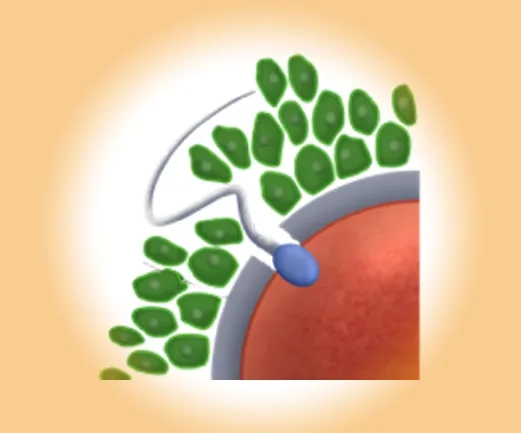
- IVF (In vitro fertilisation): During an IVF treatment, eggs are retrieved after a short period of hormonal stimulation and brought together with sperm in a laboratory dish. Once fertilisation takes place outside the body, one healthy embryo is carefully transferred back into the uterus — giving it the best chance to implant and develop naturally.
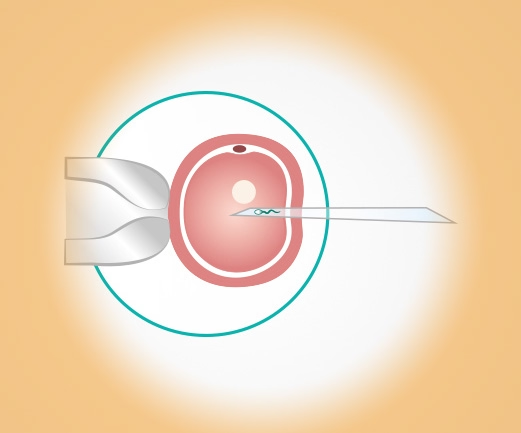
- ICSI (Intracytoplasmic sperm injection): ICSI is recommended when, in addition to endometriosis, a male fertility factor is present. In this procedure, a single healthy sperm is directly injected into an egg to achieve fertilisation. This method can help overcome more complex fertility challenges and offers another hopeful path toward parenthood.
IVF outcomes with endometriosis
- In mild cases, IVF success rates are similar to women without endometriosis.
- In advanced stages, implantation rates may be lower, but IVF/ICSI remains the most effective method.
- ICSI vs. IVF: ICSI is considered if sperm quality or fertilisation failure is a factor.
Risks of pregnancy with endometriosis
Pregnancy is possible with endometriosis, but studies show:
- Miscarriage risk: up to 75% higher.
- Ectopic pregnancy risk: 2–3 times higher.
- Preterm birth risk: 2–2.5 times higher.
- Placental complications: placenta previa and impaired fetal growth are more common.
Close monitoring by specialists helps detect and manage these risks early.
Endometriosis fertility statistics at a glance
- 30–50% of infertile women have endometriosis.
- Spontaneous conception is possible but reduced.
- IVF pregnancy rates: 20–30% per cycle, depending on age and stage (DIR data).
- Miscarriage rate: 1.5–2 times higher than average.
These values are meant as general guidance and will be discussed in detail and adapted to your individual situation during your personal consultation.
Individualised care at Kinderwunschzentrum Dresden
Our approach includes:
- Precise diagnostics – ultrasound, hormone analysis, laparoscopy when needed.
- Tailored treatment planning – balancing surgery, IVF, or combined approaches.
- Close follow-up – during treatment and throughout pregnancy.
- Holistic support – medical expertise, counseling, and compassionate care.
FAQ – Endometriosis and Fertility
How many women with endometriosis are infertile?
About 30–50% of women with endometriosis experience infertility, depending on severity.
Is surgery always recommended before IVF?
No. Surgery can help in cases with large endometriomas (endometriosis cysts) or severe adhesions, but IVF without surgery is often more effective in mild cases.
What are the chances of pregnancy with IVF in endometriosis?
Success rates depend on age and disease stage. In mild forms, outcomes are close to average IVF rates; in advanced forms, rates are reduced but IVF remains the best option.
Should I consider ICSI or IVF with endometriosis?
Both are possible. ICSI is recommended if fertilisation issues or male factor infertility exist.
What pregnancy risks are linked to endometriosis?
While there is an increased risk of miscarriage, preterm birth, or placental complications, with expert care and close monitoring, many women go on to have healthy pregnancies and babies.
Don’t let endometriosis define your fertility journey
Endometriosis and fertility challenges can feel overwhelming – but there are proven paths forward. At Kinderwunschzentrum Dresden, you will receive expert care, clear guidance, and compassionate support tailored to your needs.
Book your consultation now – discreetly and conveniently via Doctolib.
Dresden Fertility Center
in the Wöhrl Plaza
Prager Str. 8a
01069 Dresden
Phone +49 351 501 400-0
Fax +49 351 501 400-28
Email:
Instagram Arrange your first appointment NEW: Video consultation! Downloads Impressions
Cryobank in the Kinderwunschzentrum Dresden
Prager Str. 8a
01069 Dresden
Tel. +49 351 50140019
E-Mail:
| Office hours | |
|---|---|
| Mon., Wed., Thu. | 08.00 – 19.00 Hrs |
| Tue. | 08.00 – 13.00 Hrs and 14.30 – 19.00 Hrs |
| Fri. | 08.00 – 14.00 Hrs |
Availability by telephone |
|
| Mon., Wed. | 08.00 – 13.00 Hrs and 14.30 – 18.00 Hrs |
| Tue., Thu., Fri. | 08.00 – 13.00 Hrs |
Blood sampling |
|
| Mon. - Thu. | 08.00 – 17.30 Hrs |
| Fri. | 08.00 – 13.30 Hrs |
On Tuesdays the clinic is closed from 13.00 to 14.30 Hrs! |
|






Service at the Fertility Center Dresden

To the planned child