


Blastocyst Transfer – Procedure, Success Rates and What Happens Next
Evidence-based fertility care with empathy and clarity at Kinderwunschzentrum Dresden
For many individuals and couples undergoing fertility treatment, the blastocyst transfer represents a pivotal moment filled with hope, anticipation and understandable uncertainty. Reaching the blastocyst stage is often perceived as a milestone in IVF or ICSI treatment, yet it also raises many questions: What happens after the transfer? When can pregnancy be detected? What are the real chances of success, and what risks should be considered?
This comprehensive guide explains the blastocyst transfer in medically precise yet accessible terms. It addresses success rates, possible disadvantages, emotional experiences after transfer, hCG testing timelines and how Kinderwunschzentrum Dresden supports patients with expertise and compassion.
What Is a Blastocyst Transfer?
A blastocyst transfer is an embryo transfer performed on day 5 or day 6 after fertilisation, when the embryo has reached the blastocyst stage. At this stage, the embryo consists of several hundred cells and has differentiated into distinct structures essential for implantation and further development.
How the Blastocyst Stage Differs From Earlier Transfers
Compared to day-2 or day-3 embryo transfers, blastocyst transfer allows:
- Extended embryo development in the laboratory
- Better selection of embryos with higher implantation potential
- Synchronisation between embryo development and the uterine lining
Not all embryos reach the blastocyst stage. This approach is recommended selectively based on individual medical conditions.
Why Is Blastocyst Transfer Used in Fertility Treatment?
Blastocyst transfer aims to improve the likelihood that an embryo will implant successfully in the uterus.
Medical Rationale
Scientific evidence suggests that embryos reaching the blastocyst stage demonstrate stronger developmental competence. Transferring embryos at this stage may:
- Increase implantation rates in selected patients
- Reduce the risk of transferring embryos with limited developmental potential
- Support single embryo transfer strategies, reducing multiple pregnancy risks
Kinderwunschzentrum Dresden evaluates each case individually before recommending blastocyst transfer.
The Blastocyst Transfer Procedure Step by Step
Embryo Development in the Laboratory
After fertilisation via IVF or ICSI, embryos are cultured under controlled laboratory conditions. Embryologists monitor cell division, morphology and developmental timing.
Embryo Selection
Only embryos that reach the blastocyst stage with appropriate quality criteria are considered for transfer. This careful selection is a central advantage of blastocyst transfer.
The Transfer Itself
The blastocyst transfer is a gentle, ultrasound-guided procedure:
- No anaesthesia required
- Usually painless
- Takes only a few minutes
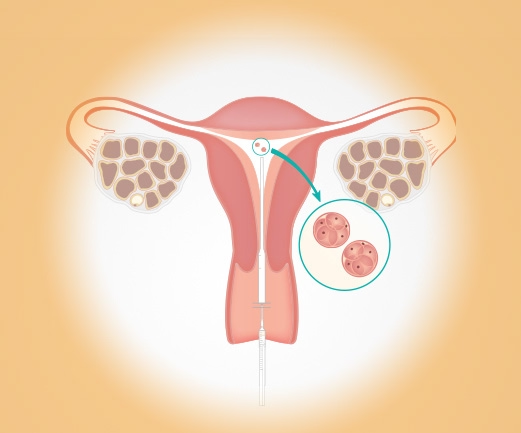
The embryo is placed into the uterine cavity using a soft catheter. Afterwards, patients can rest briefly before returning home.
What Happens After a Blastocyst Transfer?
The period following the blastocyst transfer is often emotionally challenging.
The Implantation Window
Implantation typically occurs 1–3 days after blastocyst transfer, although timing can vary.
Can Implantation Be Felt?
Many patients ask whether implantation can be physically felt. Scientifically, implantation is usually not perceptible. Some may notice mild symptoms such as:
- Light cramping
- Mild spotting
- Breast tenderness
These sensations are not reliable indicators of implantation and may also result from hormonal support.
Blastocyst Transfer Success Rates
How High Are the Chances of Success?
Success rates depend primarily on age and embryo quality. According to data from the German IVF Registry (DIR Yearbook):
- Women under 35 may achieve clinical pregnancy rates of around 45–50% per blastocyst transfer
- Success rates gradually decline with increasing age
- Cumulative pregnancy rates improve over multiple attempts
How Many Attempts With Blastocyst Transfer Are Typical?
While some pregnancies occur after the first attempt, many patients require two to three transfer cycles. This is medically normal and does not indicate treatment failure.
hCG Levels After Blastocyst Transfer
When Is the Blood Test Performed?
At Kinderwunschzentrum Dresden the pregnancy blood test is usually performed:
- 12 to 14 days after the transfer
- Depending on your individual treatment protocol
- With follow-up hCG testing if needed
A blood test is much more reliable than a urine test, as it can detect very small amounts of the pregnancy hormone hCG at an early stage.
We know the waiting time can feel stressful. Please remember that every body is different, and testing at the right time helps avoid unnecessary worry and uncertainty. Your medical team interprets results in context and provides guidance.
Urine Pregnancy Test After Blastocyst Transfer
When can I take a urine pregnancy test after a blastocyst transfer??
A blastocyst transfer does not automatically shorten the waiting time until a pregnancy test is reliable.
The earliest time a urine test may give a reasonably reliable result is:
- 10 days after the blastocyst transfer
Before day 9, urine tests are often false-negative or may be affected by the trigger injection used earlier in treatment. For a clear and dependable result, Kinderwunschzentrum Dresden recommends:
- A blood test 12–14 days after the blastocyst transfer
Risks and Disadvantages of Blastocyst Transfer
Possible Disadvantages
While blastocyst transfer offers advantages, it is not without limitations:
- Not all embryos reach the blastocyst stage
- Risk of having no embryo available for transfer
- Slightly higher laboratory demands
- Not suitable for all patients
Risk of Miscarriage After Blastocyst Transfer
Miscarriage risk depends mainly on:
- Maternal age
- Chromosomal normality of the embryo
- Underlying medical conditions
Blastocyst transfer itself does not increase miscarriage risk compared to earlier transfers. Some studies suggest lower miscarriage rates due to better embryo selection.
Costs of Blastocyst Transfer
What Costs Are Involved?
The costs typically vary between:
- 400–500 euros in addition to the IVF/ICSI cycle. This is a self-payed treatment (not covered by health insurance)
At the Kinderwunschzentrum Dresden, all costs are explained clearly and transparently during the consultation before treatment begins, so you can make an informed and confident decision.
Is Blastocyst Transfer Right for You?
Blastocyst transfer may be particularly suitable when:
- Multiple embryos are available
- Previous early transfers were unsuccessful
- Single embryo transfer is planned
- Medical evaluation supports extended culture
A personalised recommendation is always made based on your specific fertility profile.
Emotional Experience After Blastocyst Transfer
The waiting period after transfer is often described as emotionally intense. Feelings of hope, fear and anticipation may coexist. Kinderwunschzentrum Dresden recognises this emotional burden and supports patients through:
- Clear communication
- Compassionate counselling
- Psychological support options
- Respectful, non-judgmental care
You are not expected to navigate this phase alone.
FAQ – Common Questions About Blastocyst Transfer
When does implantation occur after blastocyst transfer?
Implantation usually occurs within 1–3 days after transfer, though exact timing varies.
Can implantation symptoms be felt?
Implantation is generally not noticeable. Symptoms are not reliable indicators of success.
When is the blood pregnancy test done?
At the Kinderwunschzentrum Dresden, the blood pregnancy test is usually performed:
- 12 to 14 days after the transfer
- Depending on your individual treatment protocol
- Including follow-up hCG level monitoring if needed
The blood test is significantly more reliable than urine tests, as it can detect even very small, early levels of the pregnancy hormone hCG.
What are the chances of success with blastocyst transfer?
Approximate success rates by age (international data)
- Under 35 years: 45–50%
- 35–37 years: 35–40%
- 38–40 years: 25–30%
- Over 40 years: 10–20%
These figures are average reference values. Individual success rates can vary, as many personal factors play an important role, including:
- Quality of the blastocyst
- Cause of infertility
- Condition of the uterine lining
- Hormonal situation
- Outcome of previous embryo transfers
Your medical team will take all of these factors into account when advising you, as every fertility journey is unique.
Are there disadvantages to blastocyst transfer?
Important considerations:
- Not all embryos reach the blastocyst stage
- There is a possibility that fewer embryos may be available for transfer
- Higher laboratory costs
- Requires experienced embryologists and stable, high-quality culture conditions
Your medical team will carefully evaluate whether this approach is suitable for you and discuss the benefits and limitations.
A blastocyst transfer can be an important step on your fertility journey. With medical expertise, transparent guidance and compassionate care, Kinderwunschzentrum Dresden supports you in making informed and confident decisions.
Schedule your confidential consultation now via Doctolib – respectful, evidence-based and tailored to your needs.
Dresden Fertility Center
in the Wöhrl Plaza
Prager Str. 8a
01069 Dresden
Phone +49 351 501 400-0
Fax +49 351 501 400-28
Email:
Instagram Arrange your first appointment NEW: Video consultation! Downloads Impressions

Cryobank in the Kinderwunschzentrum Dresden
Prager Str. 8a
01069 Dresden
Tel. +49 351 50140019
E-Mail:
| Office hours | |
|---|---|
| Mon., Wed., Thu. | 08.00 – 19.00 Hrs |
| Tue. | 08.00 – 13.00 Hrs and 14.30 – 19.00 Hrs |
| Fri. | 08.00 – 14.00 Hrs |
Availability by telephone |
|
| Mon., Wed. | 08.00 – 13.00 Hrs and 14.30 – 18.00 Hrs |
| Tue., Thu., Fri. | 08.00 – 13.00 Hrs |
Blood sampling |
|
| Mon. - Thu. | 08.00 – 17.30 Hrs |
| Fri. | 08.00 – 13.30 Hrs |
On Tuesdays the clinic is closed from 13.00 to 14.30 Hrs! |
|







Service at the Fertility Center Dresden

To the planned child