


Frozen Embryo Transfer (FET): A Possible Path to Parenthood at the Kinderwunschzentrum Dresden
Maximising your chances: How a frozen embryo transfer provides a gentle and highly effective path to achieving your dream of a family.
In fertility treatment, there are moments shaped by great hope as well as patience. A frozen embryo transfer (cryo transfer) is one such step — a procedure that offers couples additional opportunities without subjecting the woman’s body to another intensive hormonal stimulation.
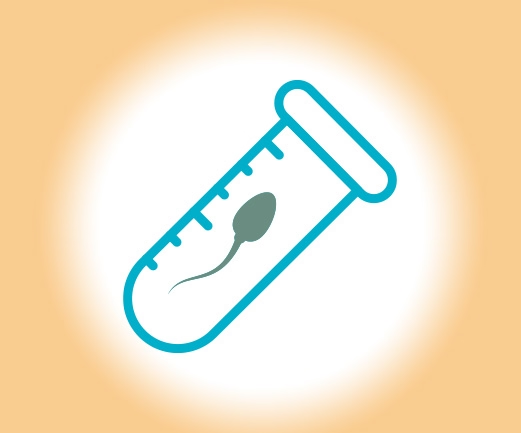
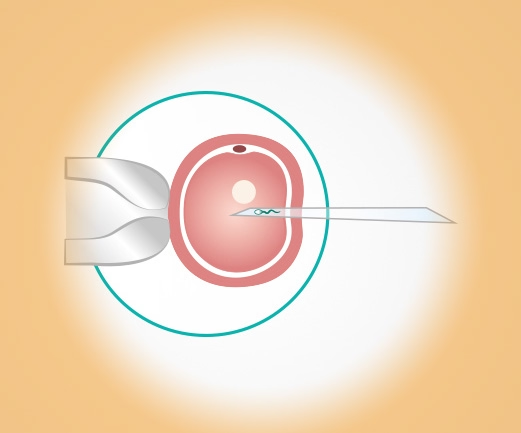
A cryo transfer involves the thawing and transfer of embryos that were obtained during a previous treatment cycle (IVF or ICSI) and safely stored through cryopreservation.
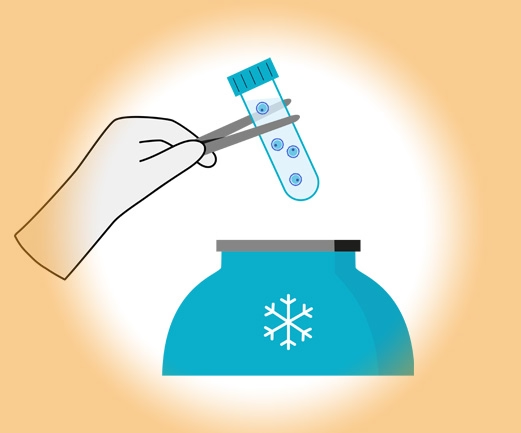
At the Kinderwunschzentrum Dresden, we use state-of-the-art vitrification techniques. This ultra-rapid freezing method ensures that the vitality of the cells is fully preserved, providing an optimal foundation for successful implantation.
The frozen embryo transfer procedure: A step-by-step guide
Understanding the frozen embryo transfer procedure helps alleviate the uncertainty that often accompanies fertility treatments. Unlike a full IVF cycle, the frozen embryo transfer process is significantly less invasive and does not require surgical egg retrieval.
The timeline of a cryo transfer is closely monitored by our specialists and usually spans two to three weeks, beginning on the first day of the menstrual cycle. The goal is to prepare the uterine lining optimally for the arrival of the embryo. Here is how the process unfolds at Kinderwunschzentrum Dresden:
Preparation for frozen embryo transfer
There are two main approaches to preparing for a frozen embryo transfer, which are discussed and tailored to your individual situation at the Kinderwunschzentrum Dresden:
- Natural cycle: For women with regular ovulation, the transfer can take place in a largely unstimulated cycle. Ultrasound monitoring is used to determine the optimal timing for thawing and transfer.
- Hormone replacement (artificial) cycle: In this approach, the uterine lining is built up in a targeted way using estrogen (tablets or patches). This offers a high level of planning reliability and is particularly suitable for women with irregular cycles.
In both cases, preparation for the frozen embryo transfer includes ultrasound assessment of the uterine lining thickness and the ovaries to identify the optimal “implantation window.”
The thawing process and transfer day
On the day of the transfer, our laboratory team carefully thaws the embryo. A key factor for success is the developmental stage of the embryo. Particularly high expectations are associated with the transfer of a blastocyst. A blastocyst is an embryo at day 5 of development, which already shows a high potential for implantation.
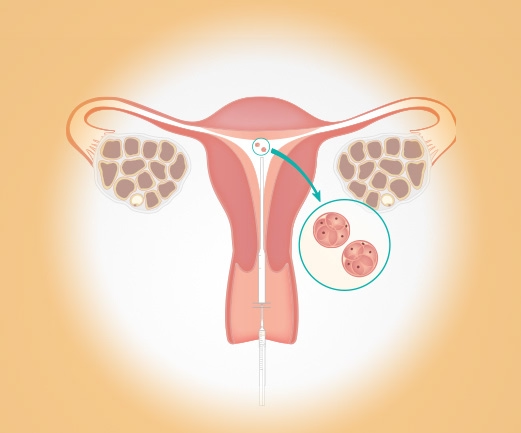
Only the most viable embryos reach this stage. The transfer itself is a simple, painless procedure similar to a gynecological exam. Using a thin catheter, the embryo is placed into the uterine cavity under ultrasound guidance. You can usually return to your daily activities immediately after leaving Kinderwunschzentrum Dresden.
Frozen embryo transfer success rates: What to expect?
One of the most common questions is: "What are the success rates of a single frozen embryo transfer?" In recent years, data from the German IVF Register (DIR) has shown that the success rates for frozen embryo transfer are now nearly equal to, and in some cases higher than, those of fresh transfers.
What is the pregnancy rate after a frozen embryo transfer?
The statistics are encouraging. According to the German IVF Register (DIR), pregnancy rates after a frozen embryo transfer range between 25% and 40% per transfer, depending on the woman’s age and the quality of the embryos.
When looking at an IVF or ICSI treatment as a whole, frozen embryo transfers significantly increase the cumulative pregnancy rate. This means that with a single egg retrieval, multiple transfer attempts can be made through cryopreservation — greatly increasing the overall chance of achieving pregnancy.
Frozen embryo transfer costs and financial planning
An important aspect when making a decision is cost transparency. The costs of a frozen embryo transfer are made up of several components, including the preliminary ultrasound examinations, medications (such as Ovitrelle and progesterone), thawing of the cells, laboratory culture, and the actual embryo transfer procedure.
Cost structure and services
When couples ask about the cost of a frozen embryo transfer, the expenses at the Kinderwunschzentrum Dresden usually range between 350 and 800 euros per cycle, depending on the individual laboratory services required (for example blastocyst culture or assisted hatching).
In addition, there are annual storage fees for the cryopreserved cells. Compared to a complete IVF treatment, however, the overall costs are significantly lower.
Health insurance coverage for frozen embryo transfer
At present, Gewrman statutory health insurance does not cover the costs of cryopreservation or frozen embryo transfer. In most cases, this is therefore a self-pay treatment.
Nevertheless, many couples choose this option, as the emotional and physical burden is considerably lower compared to starting a completely new IVF or ICSI cycle.
Supporting you with the highest standards of care – why choose us in Dresden
Our expertise in cryobiology is built on decades of clinical experience and the strictest laboratory quality controls. We are deeply aware of the emotional significance of every single step in treatment — we know that behind every frozen embryo lies great hope for your future family.
We ensure this level of safety and reliability through three key pillars of our work:
- Specialized laboratory expertise: Our laboratory teams are highly specialised in vitrification (ultra-rapid freezing). This precise technique allows us to achieve embryo survival rates of over 98% after thawing — an excellent result that helps maximise your chances.
- Medical guidelines: We work strictly according to the latest recommendations of leading national and international professional societies, such as DGRM and ESHRE (German Society for Reproductive Medicine and European Society of Human Reproduction and Embryology). This ensures that your treatment is always based on the most up-to-date medical knowledge.
- Honesty and transparency: Trust is built on clarity. We provide open and realistic information about all relevant factors. This also includes transparent discussion of rare risks, such as the possibility that an embryo may not survive the thawing process.
- By combining state-of-the-art laboratory technology with compassionate care, Kinderwunschzentrum Dresden creates a solid foundation where your hope for a family can grow.
Recovery and lifestyle during the waiting period
The "two-week wait" after a frozen embryo transfer can be emotionally trying. At Kinderwunschzentrum Dresden, we encourage you to maintain a healthy, balanced lifestyle. There is no need for complete bed rest; light activity can actually promote blood flow to the uterus.
Strenuous exercise should be avoided, but moderate physical activity can be beneficial. Any prescribed medication support (usually progesterone) should be continued consistently to optimally support early pregnancy. Our team is always available to answer your questions during this sensitive time, providing the reassurance you need.
FAQ – Frequently Asked Questions about Frozen Embryo Transfer
How long can embryos remain frozen?
In theory, embryos can be stored for many years, even decades, without loss of quality. In practice, legal regulations and personal life planning usually define the time frame.
Can I go to work during a cryo cycle?
Yes. From a medical perspective, sick leave is usually not necessary.
Does the freezing process damage the embryos?
With modern vitrification (flash-freezing), the survival rate of embryos at Kinderwunschzentrum Dresden is over 97%. The embryos are protected by special solutions that prevent ice crystal formation, preserving their cellular integrity.
How many embryos should be transferred?
To minimise the risk of multiple pregnancies, we usually recommend a "Single Embryo Transfer", especially when using a frozen embryo transfer blastocyst. We will discuss the best strategy for your specific situation during your consultation.
Is a frozen embryo transfer painful?
No. The transfer is comparable to a routine gynecological examination. A thin catheter is gently guided through the cervix. Anesthesia is not required.
What happens if the embryo does not survive the thawing?
Although this is rare thanks to modern technology (less than 3%), it can occur. In such cases, we will discuss the next steps with you promptly. Often, additional embryos are still stored.
When can I take a pregnancy test?
A reliable result is provided by a blood test at the Kinderwunschzentrum Dresden about 10 to 14 days after the transfer. Home urine tests may be affected by medication residues and are therefore not recommended too early.
Your path forward: Experience and empathy at Kinderwunschzentrum Dresden
The decision to proceed with a frozen embryo transfer is a significant step toward your goal of becoming a parent. A frozen embryo transfer is more than just a medical procedure — it is a second, often more relaxed chance on the path toward building your family. Knowing that fertilised embryos are already waiting for you can help relieve much of the pressure during your fertility journey.
At Kinderwunschzentrum Dresden, we combine the latest scientific advancements with a deeply personal approach.
Take the next step toward your dream. Book your consultation now – easily and confidentially via Doctolib.
Dresden Fertility Center
in the Wöhrl Plaza
Prager Str. 8a
01069 Dresden
Phone +49 351 501 400-0
Fax +49 351 501 400-28
Email:
Instagram Arrange your first appointment NEW: Video consultation! Downloads Impressions

Cryobank in the Kinderwunschzentrum Dresden
Prager Str. 8a
01069 Dresden
Tel. +49 351 50140019
E-Mail:
| Office hours | |
|---|---|
| Mon., Wed., Thu. | 08.00 – 19.00 Hrs |
| Tue. |
08.00 – 13.00 Hrs and
14.30 – 19.00 Hrs |
| Fri. | 08.00 – 14.00 Hrs |
|
Availability by telephone |
|
| Mon., Wed. |
08.00 – 13.00 Hrs and
14.30 – 18.00 Hrs |
| Tue., Thu., Fri. | 08.00 – 13.00 Hrs |
|
Blood sampling |
|
| Mon. - Thu. | 08.00 – 17.30 Hrs |
| Fri. | 08.00 – 13.30 Hrs |
|
On Tuesdays the clinic is closed from 13.00 to 14.30 Hrs! |
|






Service at the Fertility Center Dresden

To the planned child