


Fertility and Cancer in Men – Preserving Fatherhood Before and After Treatment
Evidence-based fertility counselling with empathy and clarity at Kinderwunschzentrum Dresden
A cancer diagnosis changes life abruptly. For many men, alongside questions about treatment and survival, another deeply personal concern arises: Will I still be able to have children? Fertility and cancer in men are closely connected, as oncological therapies can temporarily or permanently affect sperm production and reproductive potential.
This guide explains how cancer and its treatment affect male fertility, whether fatherhood is possible after chemotherapy, how fertility can be preserved before treatment, and how Kinderwunschzentrum Dresden supports men and couples with medical expertise, transparency and compassion.
How Cancer and Cancer Treatment Affect Male Fertility
Why Fertility Can Be Impacted
Male fertility depends on continuous sperm production in the testicles. Cancer itself, as well as treatments such as chemotherapy, radiation or surgery, can disrupt this process.
The extent of fertility impairment depends on:
- Type of cancer
- Type and dosage of chemotherapy
- Radiation exposure to the testicles
- Surgical removal of reproductive tissue
- Age and baseline sperm quality
Some treatments affect sperm temporarily, while others may cause long-term or permanent damage.
Chemotherapy and Male Fertility
How Chemotherapy Affects Sperm Production
Conventional chemotherapy targets rapidly dividing cells. Unfortunately, sperm-producing cells in the testicles are also highly sensitive to these agents.
Possible effects include:
- Temporary reduction in sperm count
- Complete absence of sperm (azoospermia)
- DNA damage in developing sperm cells
Recovery of sperm production may take months or years and is not guaranteed.
Is a Man Infertile After Chemotherapy?
Fertility After Chemotherapy – What Is Possible
A common fear is permanent infertility after chemotherapy. In reality:
- Some men regain sperm production over time
- Others experience long-term infertility
- Fertility outcomes vary widely between individuals
The return of sperm to the ejaculate does not always indicate normal fertility. Semen analysis provides objective assessment.
Fertility Preservation Before Chemotherapy in Men
Why Fertility Preservation Is Crucial
Whenever possible, fertility preservation should be discussed before cancer treatment begins. Sperm freezing prior to chemotherapy is a well-established and effective method.
Sperm Cryopreservation
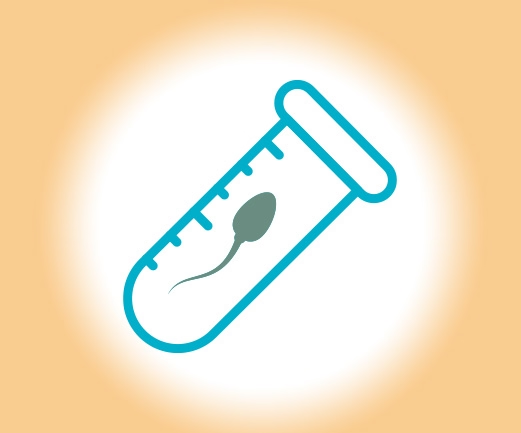
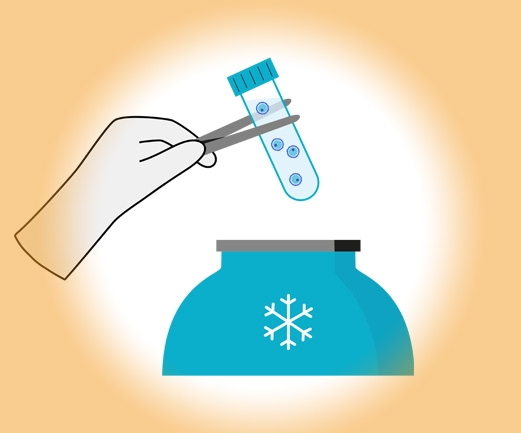
Sperm cryopreservation involves collecting and freezing semen samples for future use.
Advantages include:
- High success rates with assisted reproduction
- No delay in cancer treatment in most cases
- Long-term storage with preserved fertility potential
Kinderwunschzentrum Dresden coordinates fertility preservation quickly and discreetly, often within days of referral.
Testicular Cancer and Fertility
Testicular Cancer and the Desire to Have Children
Testicular cancer is one of the most common cancers in young men and often occurs during reproductive years.
Important considerations:
- Fertility may already be impaired before treatment
- Removal of one testicle does not automatically cause infertility
- Chemotherapy or radiation may further affect sperm production
Many men with testicular cancer can still become fathers, especially with timely fertility preservation.
Can You Become a Father After Cancer Treatment?
Fatherhood After Chemotherapy
Clinical experience and studies show that fatherhood after cancer is possible for many men.
Key factors influencing success include:
- Recovery of sperm production
- Age and fertility of the female partner
- Use of cryopreserved sperm
- Overall health after cancer treatment
Assisted reproductive techniques often make pregnancy possible even with reduced sperm quality.
How Long Should Contraception Be Used After Chemotherapy?
Waiting Period After Cancer Treatment
Doctors usually recommend avoiding conception for a certain period after conventional chemotherapy to allow damaged sperm to be replaced.
Reasons include:
- Reducing risk of genetic damage
- Allowing sperm production to stabilise
- Monitoring cancer remission
The recommended waiting period varies, often between 6 and 12 months, depending on treatment type. Individual medical advice is essential, oncological clearance is required.
Fertility Testing After Cancer
Semen Analysis
A semen analysis assesses:
- Sperm concentration
- Motility
- Morphology
It is the first step in evaluating post-treatment fertility.
Advanced Diagnostics
In selected cases, sperm DNA fragmentation testing or testicular ultrasound may be recommended.
Kinderwunschzentrum Dresden offers comprehensive yet targeted diagnostics.
Fertility Treatment Options After Cancer
Natural Conception
If sperm parameters recover sufficiently, natural conception may still be possible.
Assisted Reproductive Techniques
Depending on sperm quality, options may include:
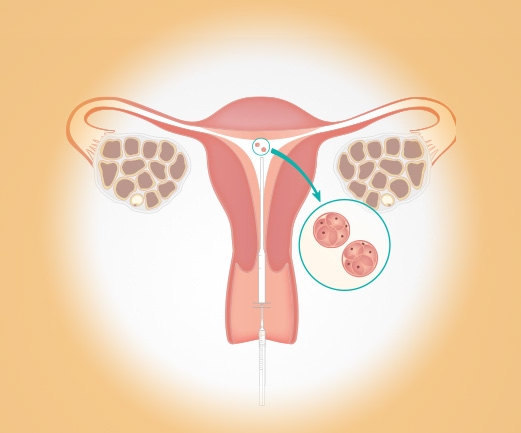
- Intrauterine insemination (IUI)
- IVF
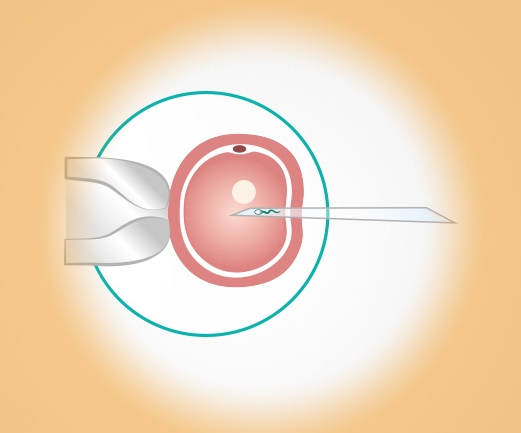
- ICSI
According to data from the German IVF Registry (DIR Yearbook), pregnancy rates using frozen sperm from cancer patients are comparable to those using fresh sperm in many cases.
Surgical Sperm Retrieval
If no sperm is present in the ejaculate, techniques such as Testicular Sperm Extraction (TESE) may be considered.
Psychological Impact of Cancer on Male Fertility
Emotional Challenges
Concerns about fertility can add significant emotional burden to an already stressful diagnosis. Men may experience:
- Fear of infertility
- Loss of future life plans
- Pressure related to masculinity or partnership
- Difficulty discussing emotions
Kinderwunschzentrum Dresden addresses these concerns with respect, discretion and empathetic counselling.
What the Data Show – Fertility Outcomes After Cancer
Research indicates that:
- Many cancer survivors become fathers naturally or with assistance
- Sperm cryopreservation significantly increases future options
Early fertility counselling is consistently associated with better long-term outcomes.
Advantages and Limitations of Fertility Preservation in Men
Advantages
- Preserves reproductive potential
- Provides reassurance during cancer treatment
- Well-established and evidence-based
- High success rates with assisted reproduction
Limitations
- Not possible in all medical situations
- Emotional and logistical challenges at diagnosis
- No guarantee of future pregnancy
Transparent counselling supports realistic expectations.
When Should Men With Cancer Seek Fertility Counselling?
Fertility counselling is recommended:
- Immediately after cancer diagnosis
- Before starting chemotherapy or radiation
- After treatment if pregnancy is desired
- If uncertainty about fertility status exists
Early consultation maximises available options.
FAQ – Common Questions About Fertility and Cancer in Men
Can a man have children after chemotherapy?
Yes, many men can become fathers after chemotherapy, either naturally or with assisted reproduction.
Does chemotherapy always cause infertility?
No. Fertility outcomes vary depending on treatment type and individual factors.
How can fertility be preserved before chemotherapy?
Sperm freezing before treatment is the most effective and widely used method.
How long should a man wait to conceive after chemotherapy?
Waiting periods vary, often 6–12 months. Individual medical advice is essential, approval from the oncology team is required.
Is pregnancy after cancer safe for the child?
Current evidence shows no increased risk of congenital abnormalities when conception occurs after appropriate recovery time.
Does health insurance cover the costs?
When there is a medical indication, cryopreservation has been a standard benefit covered by German statutory health insurance since 2021.
A cancer diagnosis does not have to mean the end of fatherhood. With evidence-based fertility medicine, timely counselling and compassionate care, Kinderwunschzentrum Dresden supports men and couples in preserving fertility and planning a future family.
Schedule your confidential consultation now via Doctolib – professional, respectful and individually tailored.
Dresden Fertility Center
in the Wöhrl Plaza
Prager Str. 8a
01069 Dresden
Phone +49 351 501 400-0
Fax +49 351 501 400-28
Email:
Instagram Arrange your first appointment NEW: Video consultation! Downloads Impressions

Cryobank in the Kinderwunschzentrum Dresden
Prager Str. 8a
01069 Dresden
Tel. +49 351 50140019
E-Mail:
| Office hours | |
|---|---|
| Mon., Wed., Thu. | 08.00 – 19.00 Hrs |
| Tue. | 08.00 – 13.00 Hrs and 14.30 – 19.00 Hrs |
| Fri. | 08.00 – 14.00 Hrs |
Availability by telephone |
|
| Mon., Wed. | 08.00 – 13.00 Hrs and 14.30 – 18.00 Hrs |
| Tue., Thu., Fri. | 08.00 – 13.00 Hrs |
Blood sampling |
|
| Mon. - Thu. | 08.00 – 17.30 Hrs |
| Fri. | 08.00 – 13.30 Hrs |
On Tuesdays the clinic is closed from 13.00 to 14.30 Hrs! |
|






Service at the Fertility Center Dresden

To the planned child