

OAT Syndrome: Understanding Male Infertility and Finding Paths to Fatherhood
When sperm quality affects the dream of a family: Medical expertise and modern solutions for OAT syndrome at Kinderwunschzentrum Dresden.
The realisation that the path to a child is more difficult than expected is often a profound emotional burden for couples. While the focus in fertility diagnostics is frequently on the woman, male factors play an equal role. One of the most common diagnoses in men with an unfulfilled wish to have children is OAT syndrome.
OAT syndrome stands for Oligo-Astheno-Teratozoospermia. It describes a combined restriction of sperm quality where concentration, motility, and morphology are simultaneously affected. Although the diagnosis may sound intimidating at first, modern reproductive medicine offers excellent therapeutic options.
At Kinderwunschzentrum Dresden, we specialise in identifying the causes of male infertility and developing personalised treatment plans. This guide will help you understand the medical background of OAT syndrome, explore ways to improve sperm quality, and show why achieving pregnancy is still a very realistic goal.
What exactly is OAT syndrome?
The term OAT syndrome is a clinical classification based on the analysis of a spermiogram. For a diagnosis to be made, three specific criteria regarding sperm health must fall below the reference values established by the World Health Organization (WHO):
- Oligozoospermia: A reduced number of sperm cells (concentration).
- Asthenozoospermia: Reduced motility (movement) of the sperm cells.
- Teratozoospermia: A high proportion of abnormally shaped (morphology) sperm cells.
When these three factors occur together, it is referred to as OAT syndrome. This combination makes it significantly harder for sperm to reach the egg naturally and penetrate its protective outer layer.
Causes of OAT syndrome: Why is sperm quality affected?
The production of sperm (spermatogenesis) is a highly sensitive process that takes about 72 days. Various factors can disrupt this cycle, leading to the development of OAT syndrome.
- Anatomical factors: Varicose veins of the testicle (varicocele) can lead to increased temperature and damage sensitive germ cells.
- Hormonal disorders: Dysfunction of the pituitary gland can reduce sperm production.
- Infections: Previous inflammation of the testicles or epididymis (for example due to mumps or chlamydia) often leaves lasting damage.
- Environment and lifestyle: Smoking, excessive alcohol consumption, environmental toxins, and severe overweight can negatively affect fertility.
- Genetic causes: In some cases, chromosomal abnormalities are present that limit fertility.
How to improve OAT syndrome: Lifestyle and medical support
A common question among our patients at Kinderwunschzentrum Dresden is whether they can improve OAT syndrome through their own actions. Because the body produces new sperm constantly, positive changes can indeed have an impact after approximately three months.
- A balanced diet rich in antioxidants (such as vitamin C, vitamin E, zinc, and selenium) can help reduce oxidative stress in the testicles. This type of stress is often a contributing factor in fertility problems related to astheno-teratozoospermia.
- Avoid nicotine and reduce alcohol and energy drink consumption
- Avoid excessive heat exposure (hot baths, heated car seats, tight-fitting underwear)
- Engage in regular, moderate physical activity without overexertion
- Reduce stress and ensure adequate sleep to support hormonal balance
However, it is important to remain realistic: severe OAT syndrome usually cannot be “cured” with supplements and life-style changes alone, but these measures can help optimise the foundation for medical fertility treatments.
ICSI: The gold standard for OAT syndrome fertility treatment
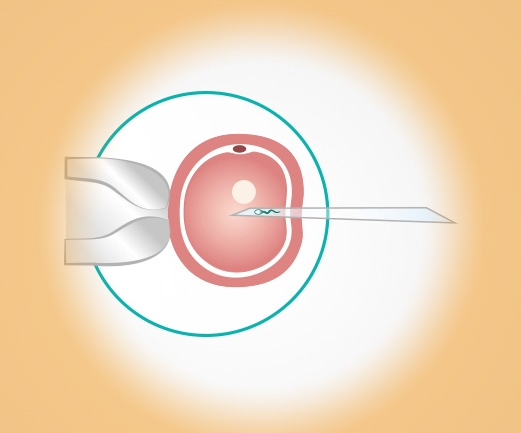
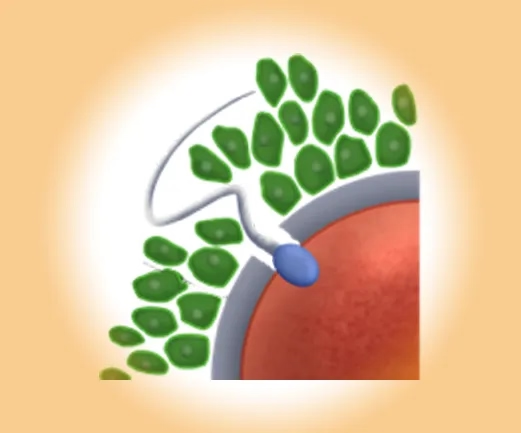
For many couples, the most effective solution for OAT syndrome is Intracytoplasmic Sperm Injection (ICSI). This specialised form of IVF was developed specifically to overcome severe male infertility factors.
In an ICSI procedure at Kinderwunschzentrum Dresden, our embryologists select a single, healthy, and motile sperm cell and inject it directly into the retrieved egg. This bypasses the natural hurdles of low concentration and poor motility that characterise OAT syndrome.
This technology has revolutionised the treatment of OAT syndrome, allowing many men to become biological fathers who would have had little chance just a few decades ago.
Diagnostics at Kinderwunschzentrum Dresden: Precision and empathy
The foundation of every treatment at Kinderwunschzentrum Dresden is a high-quality spermiogram. We perform this analysis according to the latest WHO standards, ensuring that we capture a precise picture of your fertility status.
Because sperm quality can fluctuate due to illness or stress, we often recommend a second spermiogram. This ensures that the diagnosis of OAT syndrome is stable and not a temporary dip in quality.
In addition to the spermiogram, we may recommend:
- Hormone Analysis, if appropriate: Checking testosterone, FSH, and LH levels.
- Ultrasound: Examining the testes for varicoceles or other structural issues.
- Genetic Counseling: Especially in cases of very low sperm counts, to rule out hereditary factors.
The psychological impact of OAT syndrome
A diagnosis of OAT syndrome can be a significant blow to a man's self-esteem. In our society, virility and fertility are often closely linked. We want you to know that a limitation in sperm quality has no reflection on your masculinity or your potential to be a wonderful father.
At Kinderwunschzentrum Dresden, we treat OAT syndrome as a medical condition like any other. We provide a discreet, professional, and supportive environment where both partners feel heard. Open communication between partners and professional counseling can help navigate the emotional ups and downs of the journey.
Success rates: Realistic hope for the future
The prognosis for OAT syndrome is generally very good when using assisted reproduction. According to the German IVF Register (D·I·R), approximately 25% to 40% of treatment cycles result in a clinical pregnancy.. This means that even with a severe diagnosis, the chances of a successful pregnancy are excellent. In addition to sperm quality, the age of the female partner is one of the most important factors influencing success
It is important to remember that it only takes one healthy sperm cell to father a child. Our advanced laboratory techniques allow us to find that one cell, even in samples where the majority are non-functional.
FAQ – Frequently Asked Questions about OAT Syndrome
Is natural pregnancy possible with OAT syndrome?
It is not impossible, but the likelihood is significantly reduced. With mild OAT syndrome, natural conception may occur with time and patience. In cases of severe OAT syndrome (OAT III), medical assistance is necessary in most cases.
How long does it take to see improvements in sperm quality?
Since sperm production takes about 72 days, any changes in lifestyle or diet will typically take at least three months to show up in a new spermiogram. Patience is key when attempting to improve OAT syndrome naturally.
Is OAT syndrome hereditary?
Some forms of male infertility can have a genetic component. If a genetic cause is suspected, we offer specialised counseling at Kinderwunschzentrum Dresden to discuss the implications for your future children.
Does OAT syndrome cause any other health problems?
In most cases, OAT syndrome does not affect a man's general health or sexual function (libido and erectile function). It is purely a limitation of reproductive capacity. However, a thorough check-up is always recommended to rule out underlying conditions like varicoceles.
Does OAT syndrome cause pain?
No. Reduced sperm quality itself does not cause pain. However, testicular pain may indicate underlying causes such as varicocele or inflammation, which can contribute to OAT syndrome.
What role does stress play in OAT syndrome?
Chronic stress can disrupt hormonal balance and negatively affect sperm production. Stress reduction techniques and a balanced lifestyle can be supportive, but they are usually not sufficient on their own in cases of severe impairment.
Your path to fatherhood: Consult the Kinderwunschzentrum Dresden
The diagnosis of OAT syndrome is a challenge, but it is not the end of your dream. At Kinderwunschzentrum Dresden, our expertise in reproductive medicine is based on many years of experience and the use of state-of-the-art laboratory technologies. We understand that a diagnosis of OAT syndrome can be a significant emotional challenge for men. That is why we place great importance on discreet, respectful, and professionally sound care.We will guide you through every step—from the first spermiogram to the successful treatment plan.
Take the first step toward your goal. Book your consultation now – easily and confidentially via Doctolib.
Dresden Fertility Center
in the Wöhrl Plaza
Prager Str. 8a
01069 Dresden
Phone +49 351 501 400-0
Fax +49 351 501 400-28
Email:
Instagram Arrange your first appointment NEW: Video consultation! Downloads Impressions
Cryobank in the Kinderwunschzentrum Dresden
Prager Str. 8a
01069 Dresden
Tel. +49 351 50140019
E-Mail:
| Office hours | |
|---|---|
| Mon., Wed., Thu. | 08.00 – 19.00 Hrs |
| Tue. | 08.00 – 13.00 Hrs and 14.30 – 19.00 Hrs |
| Fri. | 08.00 – 14.00 Hrs |
Availability by telephone |
|
| Mon., Wed. | 08.00 – 13.00 Hrs and 14.30 – 18.00 Hrs |
| Tue., Thu., Fri. | 08.00 – 13.00 Hrs |
Blood sampling |
|
| Mon. - Thu. | 08.00 – 17.30 Hrs |
| Fri. | 08.00 – 13.30 Hrs |
On Tuesdays the clinic is closed from 13.00 to 14.30 Hrs! |
|






Service at the Fertility Center Dresden

To the planned child