


ICSI Treatment
Understanding ICSI – Intracytoplasmic Sperm Injection – and how it can help couples with fertility challenges
The journey to parenthood can involve challenges that require medical support. Intracytoplasmic sperm injection (ICSI) is one of the most advanced assisted reproductive technologies and is particularly valuable when sperm quality is reduced or fertilisation has failed in previous attempts. At Kinderwunschzentrum Dresden, we combine scientific expertise, advanced laboratory methods, and empathetic counseling to support your path to pregnancy. This guide provides an overview of ICSI treatment, including process, success rates, costs, and possible alternatives such as PICSI.
What is ICSI?
Definition
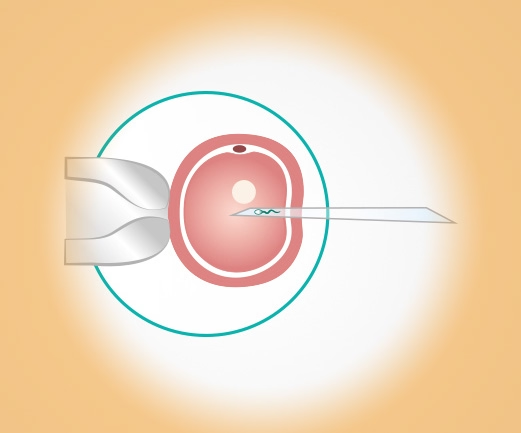
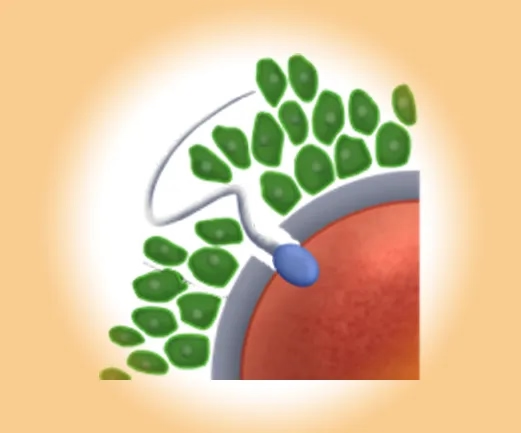
ICSI (Intracytoplasmic Sperm Injection) is a form of In Vitro Fertilisation (IVF) where a single sperm cell is injected directly into an egg using a fine glass needle. This method bypasses natural barriers and ensures fertilisation even with low sperm counts or reduced motility.
When is ICSI recommended?
- Severe male infertility (low sperm count, poor motility, high percentage of abnormal forms)
- Sperm retrieved surgically (e.g., TESE)
- Previous IVF cycles with failed fertilisation
- Cases of unexplained infertility
The ICSI treatment process
Preparation and stimulation
At the beginning of an ICSI treatment, hormonal stimulation takes place. The goal is to help several eggs mature in the ovaries at the same time – rather than just one per natural cycle. To achieve this, you will administer special hormones (such as FSH or hMG) by injection for about 10–14 days, following your doctor’s guidance.
This phase is carefully monitored. Using ultrasound, your doctor measures the growth of the follicles and, through additional blood tests, determines the optimal time to move on to the next step of treatment.
Monitoring and triggering of ovulation
Once the follicles have reached the appropriate size, ovulation is triggered with medication – usually with an hCG injection given at just the right time. Around 36 hours later, the eggs are carefully collected. Timing is essential at this stage, as the eggs should be mature but not yet released.
Egg retrieval
Eggs are collected in a short outpatient procedure under light anesthesia, usually lasting 15–20 minutes. A thin needle is gently guided through the vaginal wall into the ovaries to collect the eggs from the follicles.
In the laboratory, the retrieved eggs are carefully prepared and examined for maturity. Only mature eggs are suitable for fertilisation through ICSI.
Sperm collection
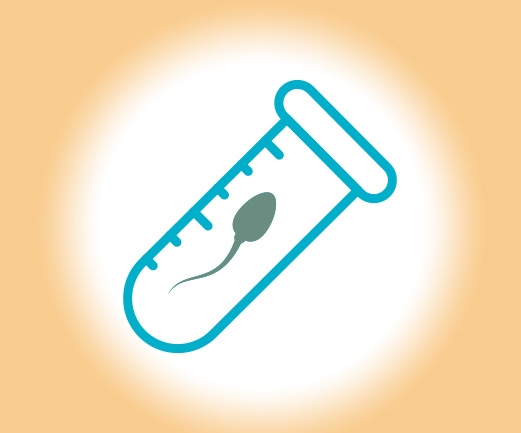
On the same day, the partner provides a fresh sperm sample – or previously cryopreserved sperm can be used. In the laboratory, the sample is carefully prepared so that the most motile and morphologically normal sperm are selected.
A special technique can also be used here: PICSI (Physiological Intracytoplasmic Sperm Injection), a variation of ICSI, in which sperm are chosen based on additional selection criteria to further improve the chances of successful fertilisation.
Fertilisation by ICSI
Now comes the most important step: under the microscope, a single carefully selected sperm cell is gently injected directly into the egg using a fine needle. This technique – called Intracytoplasmic Sperm Injection (ICSI) – requires the highest level of precision and expertise.
Not all eggs can be successfully fertilised, but in most cases, about 60–80% show a positive fertilisation reaction.
Embryo culture and selection
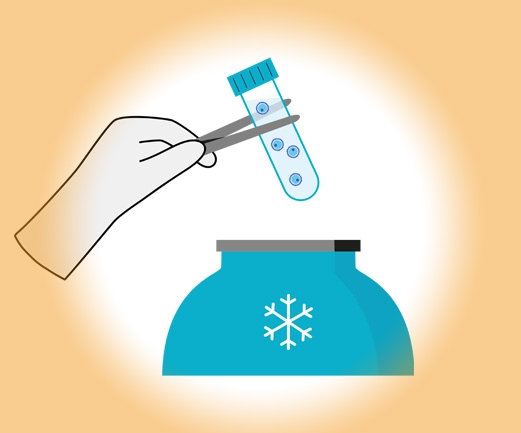
After fertilisation, a selected number of embryos are cultured in an incubator for several days. In most cases, the embryo transfer takes place on day five, at what is known as the blastocyst stage – a point at which the developmental quality of the embryos can be assessed most accurately.
At Kinderwunschzentrum Dresden, we use a time-lapse incubator, which allows continuous monitoring of embryo development without the need to remove them from the stable environment. This advanced technology helps identify the embryo with the highest potential for implantation – while ensuring optimal and undisturbed growth conditions.
Embryo transfer
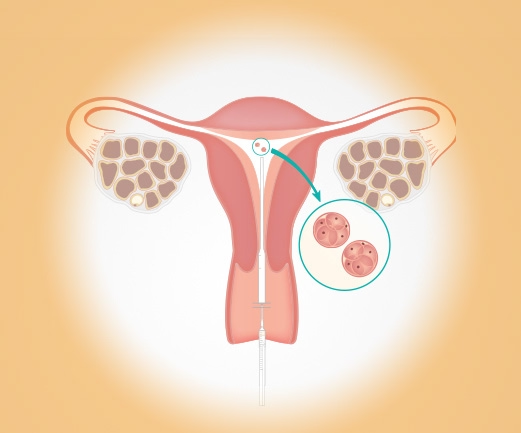
The final step is the embryo transfer – a short and painless procedure in which one embryo is gently placed into the uterus using a soft catheter.
After that comes a period of waiting and hope. Around 12 to 14 days later, a pregnancy test will show whether the embryo has successfully implanted.
ICSI success rates
The success rate of ICSI depends on several individual factors – such as the woman’s age, the number of mature eggs, sperm quality, and how well the embryos develop in the laboratory. Your medical team will consider all of these aspects to give you the best possible chance of success.
Probability of pregnancy with ICSI
When the egg reserve is intact, the uterine lining is well developed, and no other gynecological conditions are present, the chances of success with ICSI are highest for healthy women under the age of 35. According to the latest DIR Yearbook (German IVF Registry), the pregnancy rate per embryo transfer in this group is around 35–45%.
As a woman’s age increases – particularly from 38 years onward – the likelihood of pregnancy gradually declines. This is mainly due to the natural decline in egg quality that occurs over time.
How many ICSI attempts are usually needed?
On average, 2–3 attempts are necessary before achieving a pregnancy. Success is cumulative: chances rise with each cycle.
PICSI – an extension of ICSI
What is PICSI?
PICSI (Physiological Intracytoplasmic Sperm Injection) is a special technique where sperm are selected based on their ability to bind to hyaluronic acid. This mimics natural selection processes and may improve embryo quality.
When is PICSI useful?
- sperm quality is significantly reduced
- several ICSI cycles have already been unsuccessful
- only a few eggs were fertilised in previous cycles
PICSI success rates
Recent studies suggest that PICSI may help improve embryo quality and reduce the risk of early miscarriage in selected cases.
PICSI is a self-pay service in Germany.
Possible risks of ICSI treatment
ICSI is a well-established and highly safe procedure. Nevertheless, it is important to be aware of potential risks — both medical and emotional.
Severe complications are rare, but they cannot be completely ruled out.
We believe in open communication and would like to give you an honest overview.
Ovarian Hyperstimulation Syndrome (OHSS)
Ovarian Hyperstimulation Syndrome (OHSS) is a possible side effect of hormonal stimulation. It usually occurs when the ovaries respond very strongly to the medication and produce a large number of follicles at the same time.
Typical symptoms may include:
- Lower abdominal pain
- Bloating or a feeling of fullness
- Nausea
- In severe cases: fluid accumulation in the abdominal cavity
In rare situations, a short hospital stay may be required.
Thanks to individually tailored stimulation protocols, close ultrasound monitoring, and modern medication strategies, the risk of severe OHSS has been significantly reduced in recent years.
Multiple Pregnancies
The likelihood of twins or triplets increases when more than one embryo is transferred.
Multiple pregnancies carry higher health risks for both mother and babies.
For this reason, in most cases only one embryo is transferred — a practice known as Single Embryo Transfer — especially for younger women with good embryo quality.
Organ Injury / Infection
During transvaginal follicle aspiration (egg collection through the vaginal wall), there is a small risk of bleeding, infection, or injury to internal organs.
Such complications are extremely rare, but if they occur, immediate medical attention or minor surgical intervention may be required.
Risk of Birth Defects after IVF and ICSI: What Does Research Show?
A large meta-analysis comparing nearly 100,000 children conceived through IVF or ICSI with about 3.87 million children conceived naturally found a slightly, but statistically significant, increase in the risk of birth defects among children born after assisted reproduction.
Key findings:
- No specific pattern of malformations: There is no typical or unique type of malformation associated with IVF or ICSI. Rather, a variety of different defects appear slightly more often overall.
- Cause still unclear: It remains uncertain whether the higher rate is caused by the assisted reproduction procedure itself, or whether parental factors play a more important role.
- Influence of treatment steps possible: Certain elements of the treatment — such as hormonal stimulation or laboratory conditions — may play a role, but more research is needed.
- Freezing does not increase risk: Freezing of eggs or embryos (as done in social freezing or cryopreservation) does not appear to increase the risk of birth defects.
Conclusion:
Although studies indicate a slightly higher risk, the overall likelihood of birth defects after IVF or ICSI remains low.
Further research is ongoing to better understand the underlying causes.
Emotional Well-being
Fertility treatment can be emotionally challenging — particularly when faced with repeated negative results, hormonal fluctuations, or social pressure.
These experiences can sometimes lead to emotional exhaustion or strain within a relationship.
Our team at the Kinderwunschzentrum Dresden takes your concerns seriously.
We are here to support you not only medically, but also emotionally — offering psychological counseling and compassionate guidance whenever needed.
Costs of ICSI treatment
Fertility Treatment: Costs, Health Insurance, and Financial Support
An unfulfilled wish to have a child is emotionally challenging – and unfortunately often financially demanding as well. Many couples ask: How much does fertility treatment cost? What does health insurance cover? Is there any state funding available?
Here you will find the most important information about the costs of IVF and ICSI, as well as guidance on financing options.
Costs of fertility treatment with ICSI
The costs vary depending on the treatment method used:
- IVF (In Vitro Fertilisation):2,000 to 3,600 euros per treatment cycle excluding medication costs
- ICSI (Intracytoplasmic Sperm Injection):4,500 euros per treatment cycle excluding medication costs
- Additional procedures such as PICSIinvolve extra costs of around 300 euros
The final amount depends on the extent of laboratory procedures and the medications required.
What does statutory health insurance cover?
Statutory health insurance in Germany may cover up to 50% of treatment costs for a maximum of three IVF or ICSI cycles, provided certain conditions are met.
Eligibility requirements
- The couple is married
- The woman is aged 25–40, the man 25–50
- Only the couple’s own eggs and spermare used
Fully covered
- All diagnostic examinationsrequired to assess infertility
After a miscarriage or a successful birth, additional treatment attempts may again be eligible for reimbursement.
Not covered
- Cryopreservationof eggs or sperm
- Costs incurred from the fourth treatment cycle onward(self-pay)
Private health insurance: What is covered?
For privately insured couples, coverage depends on the individual insurance contract. In many cases:
- Costs for up to three treatment cyclesare covered
- No statutory age limitsapply
- Unmarried couplesare often eligible
- Some private insurers also cover social freezing (cryopreservation)
For couples with mixed insurance status (one partner privately insured, the other statutorily insured), reimbursement can be complex. Early clarification with the insurance provider is strongly recommended.
State funding for fertility treatment
Since 2016, government subsidies have also been available to unmarried couples, provided certain conditions are met.
Funding requirements
- Residence in a German federal state that offers funding (e.g. Berlin, Saxony, Lower Saxony)
- Treatment carried out at a recognised fertility clinicin that federal state
- Woman aged 25–40, man 25–50
- IVF or ICSI using own eggs and sperm
Amount of funding
- Married couples:up to 25% subsidy on the out-of-pocket share
- Unmarried couples:
- Up to 5% subsidyfor the first three cycles
- 25% subsidyfor the fourth cycle
Application process
The funding application must be submitted before treatment begins, for example to the Communal Social Association of Saxony (Kommunaler Sozialverband Sachsen).
Tax deductibility of fertility treatment costs
Good news: The costs of fertility treatment can be claimed as extraordinary medical expenses for tax purposes – including for unmarried women.
A medical certificate confirming the necessity of treatment is sufficient.
Conclusion: Fertility treatment is costly – But support is available
IVF and ICSI treatments involve significant costs, but they do not have to be overwhelming. With early planning, many couples can reduce their financial burden through health insurance coverage, state funding, and tax benefits.
Comprehensive counseling and transparent cost planning are key to starting fertility treatment with confidence.
→ Read more about cost coverage and financing options here.
FAQ – Common questions about ICSI treatment
How high is the success rate for ICSI on the first attempt?
Pregnancy rates are around 35-45% per cycle for women under 35. Success rates depend on factors like age and sperm quality.
How many ICSI attempts are typically needed?
On average 2–3 cycles are needed before pregnancy occurs, as cumulative chances increase with each attempt.
Does PICSI improve success rates?
PICSI may improve embryo quality in selected cases, but results vary. It is most useful with sperm quality issues.
How many ICSI cycles are covered by insurance?
German statutory insurance usually covers 50% for up to 3 cycles, under specific conditions. For private insurance please check your contract.
What is the difference between ICSI and IVF?
The main difference lies in the fertilisation method used in the laboratory:
- In conventional IVF, eggs and sperm are placed together in a culture dish, allowing fertilisation to occur naturally.
- In ICSI (Intracytoplasmic Sperm Injection), a single sperm is injected directly into the egg using a very fine needle. This method is particularly helpful when sperm quality is reduced, for example in cases of low sperm count or poor motility.
Both techniques aim to achieve fertilisation, but ICSI offers an effective solution when natural fertilisation is unlikely.
→ Learn more about IVF treatment here.
What are the costs of ICSI or PICSI treatment?
The average cost of ICSI treatment is approximately 4,500 euros per cycle excluding medication costs, depending on the scope of laboratory services and the medications used.
Additional procedures such as PICSI involve extra costs of around 300 euros.
If certain criteria are met, statutory health insurance in Germany may cover up to 50% of the treatment costs for up to three cycles.
→ Read more about costs and financing here.
What are the risks of ICSI?
Risks include ovarian hyperstimulation, multiple pregnancies, and emotional stress, though complications are rare with expert care.
Take your fertility journey into your own hands.
ICSI treatment can open the door to parenthood even when severe fertility challenges exist. At Kinderwunschzentrum Dresden, we combine advanced laboratory methods with compassionate care tailored to your needs.
Book your consultation today – discreetly and conveniently via Doctolib.
Dresden Fertility Center
in the Wöhrl Plaza
Prager Str. 8a
01069 Dresden
Phone +49 351 501 400-0
Fax +49 351 501 400-28
Email:
Instagram Arrange your first appointment NEW: Video consultation! Downloads Impressions

Cryobank in the Kinderwunschzentrum Dresden
Prager Str. 8a
01069 Dresden
Tel. +49 351 50140019
E-Mail:
| Office hours | |
|---|---|
| Mon., Wed., Thu. | 08.00 – 19.00 Hrs |
| Tue. | 08.00 – 13.00 Hrs and 14.30 – 19.00 Hrs |
| Fri. | 08.00 – 14.00 Hrs |
Availability by telephone |
|
| Mon., Wed. | 08.00 – 13.00 Hrs and 14.30 – 18.00 Hrs |
| Tue., Thu., Fri. | 08.00 – 13.00 Hrs |
Blood sampling |
|
| Mon. - Thu. | 08.00 – 17.30 Hrs |
| Fri. | 08.00 – 13.30 Hrs |
On Tuesdays the clinic is closed from 13.00 to 14.30 Hrs! |
|






Service at the Fertility Center Dresden

To the planned child