


Fertility and cancer in women – preserving hope before and after treatment
Evidence-based fertility care with empathy and clarity at Kinderwunschzentrum Dresden
A cancer diagnosis profoundly changes life priorities. For many women of reproductive age, concerns about survival are accompanied by an equally pressing question: Will it still be possible to have a child? Fertility and cancer are closely linked, as many oncological treatments can affect ovarian function and reproductive potential.
This guide explains how cancer and its treatment may influence female fertility, which options exist to preserve fertility before chemotherapy, whether pregnancy after cancer is possible, and how Kinderwunschzentrum Dresden supports women with medical expertise, sensitivity and realistic guidance.
How Cancer and Cancer Treatment Affect Female Fertility
Why Fertility Can Be Affected
Female fertility depends on the quantity and quality of ovarian follicles. Many cancer treatments, particularly conventional chemotherapy and radiation, can damage these follicles.
The extent of fertility impairment depends on:
- Type of cancer
- Type and dosage of chemotherapy
- Radiation exposure to ovaries or uterus
- Age at the time of treatment
- Individual ovarian reserve
Younger women often have a higher chance of ovarian recovery, but fertility preservation should be considered early whenever possible.
Is a Woman Infertile After Chemotherapy?
Fertility After Chemotherapy – A Complex Answer
A common concern is whether chemotherapy inevitably leads to infertility. The answer is nuanced:
- Some women regain regular menstrual cycles after treatment
- Others experience reduced ovarian reserve or premature menopause
- Fertility may be temporarily or permanently impaired
Resumption of menstruation does not necessarily equal preserved fertility. Ovarian reserve testing provides more reliable information.
Fertility Preservation Before Chemotherapy
Why Timing Is Critical
When cancer treatment is planned, fertility-preserving measures should ideally be discussed before chemotherapy begins. Modern reproductive medicine allows fertility preservation without delaying oncological therapy in many cases.
Fertility Preservation Options for Women
Depending on the medical situation, options may include:
- Cryopreservation of eggs (oocyte freezing)
- Cryopreservation of fertilized eggs (if a partner is available)
- Ovarian tissue cryopreservation
- Ovarian suppression with medication (limited protective effect)
Kinderwunschzentrum Dresden works closely with oncology teams to coordinate safe and timely fertility preservation.
Can You Become Pregnant After Chemotherapy?
Pregnancy After Cancer Treatment
Many women ask whether pregnancy after chemotherapy is possible. Clinical experience and studies show:
- Pregnancy after cancer is possible for many women
- Cancer recurrence risk is generally not increased by pregnancy
- Individual medical clearance is essential before attempting pregnancy
The chances depend on ovarian function, age and overall health after treatment.
How Long Should Contraception Be Used After Chemotherapy?
Waiting Period After Cancer Treatment
Doctors often recommend contraception for a defined period after chemotherapy. Reasons include:
- Allowing the body to recover
- Ensuring damaged eggs are not fertilised
- Monitoring cancer remission
The recommended duration varies by cancer type and treatment protocol. Individual advice from oncology and fertility specialists is essential.
Pregnancy After Chemotherapy – Safety Considerations
Health of the Mother and Child
Current evidence indicates that:
- Children conceived after chemotherapy do not have increased rates of congenital anomalies
- Pregnancy does not worsen cancer prognosis in most cases
- Close medical monitoring is advised
Fertility specialists collaborate with oncologists to ensure safe family planning.
Fertility Treatment After Cancer
Assisted Reproductive Options
If natural conception is not possible after cancer treatment, assisted reproductive techniques may be considered:
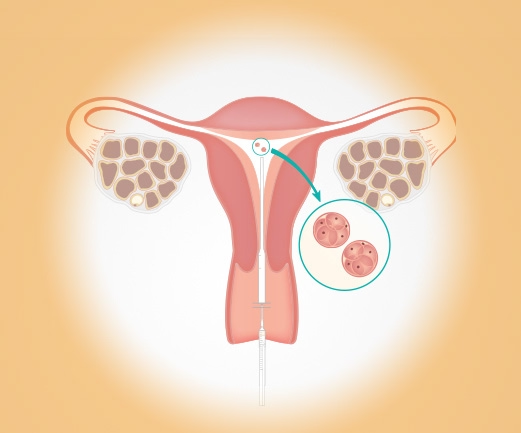
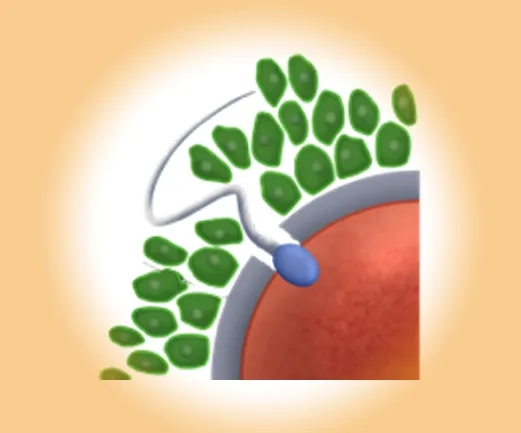
- IVF or ICSI using previously frozen eggs or fertilized eggs
- IVF with fresh eggs if ovarian function is sufficient
According to data from reproductive registries such as the German IVF Registry (DIR Yearbook), success rates depend primarily on age and egg quality rather than cancer history alone.
Psychological Impact of Cancer
Emotional Challenges
The combination of cancer and fertility concerns can lead to:
- Fear of infertility
- Grief over lost reproductive potential
- Anxiety about future health
- Uncertainty about family planning
These emotions are valid and deserve professional support.
Kinderwunschzentrum Dresden integrates emotional and psychological care into fertility counselling.
Fertility Preservation in Women With Cancer – What the Data Show
Studies indicate that fertility preservation techniques are increasingly successful:
- Frozen eggs and embryos show comparable success rates to fresh cycles
- Ovarian tissue cryopreservation has led to successful pregnancies worldwide
- Early counselling significantly improves reproductive outcomes
Studies show that up to 70–80% of women who freeze their eggs or ovarian tissue beforehand later have realistic chances of becoming pregnant. These findings underline the importance of timely referral to fertility specialists.
Advantages and Limitations of Fertility Preservation
Advantages
- Preserves reproductive options
- Provides hope and future perspective
- Does not usually delay cancer treatment
- Increasingly established and evidence-based
Limitations
- Not all methods are suitable for every cancer type
- No guarantee of pregnancy
- Emotional and financial considerations
- Requires coordination with oncology care
Transparent counselling supports informed decision-making.
Fertility and Cancer in Women – When to Seek Advice
Fertility counselling should be considered:
- Immediately after cancer diagnosis in reproductive-age women
- Before starting chemotherapy or radiation
- After cancer treatment if pregnancy is desired
- If menstrual cycles do not resume
Early consultation maximises available options.
FAQ – Common Questions About Fertility and Cancer in Women
Can a woman become pregnant after chemotherapy?
Yes, many women can conceive after chemotherapy, depending on age, treatment type and ovarian function.
Is a woman infertile after cancer treatment?
Not necessarily. Fertility outcomes vary widely. Testing ovarian reserve provides clarity.
What fertility preservation options exist before chemotherapy?
Options include freezing eggs, fertilized eggss or ovarian tissue. The choice depends on medical and personal factors.
Does pregnancy increase the risk of cancer recurrence?
Current evidence suggests pregnancy does not increase recurrence risk in most cancers, but individual assessment is required.
A cancer diagnosis does not have to mean the end of reproductive possibilities. With evidence-based fertility medicine, close interdisciplinary cooperation and empathetic care, Kinderwunschzentrum Dresden supports women in preserving fertility and planning pregnancy safely.
Schedule your confidential consultation now via Doctolib – compassionate, professional and individually tailored.
Dresden Fertility Center
in the Wöhrl Plaza
Prager Str. 8a
01069 Dresden
Phone +49 351 501 400-0
Fax +49 351 501 400-28
Email:
Instagram Arrange your first appointment NEW: Video consultation! Downloads Impressions
Cryobank in the Kinderwunschzentrum Dresden
Prager Str. 8a
01069 Dresden
Tel. +49 351 50140019
E-Mail:
| Office hours | |
|---|---|
| Mon., Wed., Thu. | 08.00 – 19.00 Hrs |
| Tue. | 08.00 – 13.00 Hrs and 14.30 – 19.00 Hrs |
| Fri. | 08.00 – 14.00 Hrs |
Availability by telephone |
|
| Mon., Wed. | 08.00 – 13.00 Hrs and 14.30 – 18.00 Hrs |
| Tue., Thu., Fri. | 08.00 – 13.00 Hrs |
Blood sampling |
|
| Mon. - Thu. | 08.00 – 17.30 Hrs |
| Fri. | 08.00 – 13.30 Hrs |
On Tuesdays the clinic is closed from 13.00 to 14.30 Hrs! |
|






Service at the Fertility Center Dresden

To the planned child